Botanical identity
Kratom is the common marketplace name for Mitragyna speciosa Korth., a tropical tree in the coffee family, Rubiaceae. Royal Botanic Gardens, Kew lists the species as accepted and records a native range extending from parts of mainland Southeast Asia through Malesia to New Guinea.
Botanical identity matters because a common name alone may not distinguish one species from another. A clear label should identify the botanical by its scientific name and, when relevant, the plant part represented.
Origin and historical context
Authoritative references describe a long record of kratom leaf use in Southeast Asia. Historical and traditional practices are cultural context; they do not establish that a modern retail product is effective for any medical purpose. Modern powders and extracts may also differ substantially from traditional leaf preparations in composition and concentration.
Evidence boundary: This guide describes terminology and purchasing information only. It does not recommend kratom for treating, preventing, or managing any condition.
Common terminology
Leaf and botanical powder
“Leaf” identifies the plant material. “Powder” describes a physical form; it does not by itself verify identity, purity, composition, or batch consistency.
Extract and concentration language
“Extract” means plant material has been processed to concentrate selected constituents. Ratio statements and percentage claims are not interchangeable. A ratio may describe input-to-output processing, while a percentage may refer to a measured constituent. The label or supporting documentation should explain what is being measured.
Color, vein, and strain names
Marketplace color and strain names are not a universal botanical classification system. Treat them as seller-specific identifiers unless the company explains how each name relates to a documented batch specification.
Batch or lot
A batch or lot identifier connects a package to production and quality records. It should match the identifier on any laboratory report presented for that product.
Common product formats
- Whole or cut leaf: minimally processed leaf material, where offered.
- Botanical powder: milled leaf sold by net weight or packaged in capsules.
- Capsules: a delivery format that should still identify the botanical, ingredients, and net contents.
- Extract powder or liquid: processed material that needs especially clear concentration, ingredient, and batch language.
A format name does not replace a complete label. Compare the statement of identity, ingredient list, net quantity, responsible company, and batch information across products.
How to read a product label
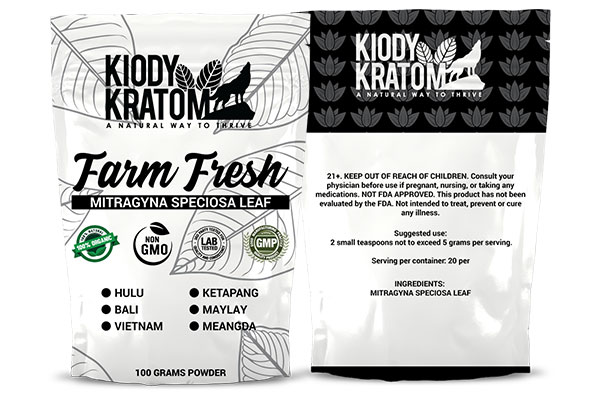
For a product represented as a dietary supplement, FDA labeling guidance identifies core elements that include a statement of identity, net quantity of contents, nutrition labeling where applicable, an ingredient list, and the name and place of business of the manufacturer, packer, or distributor.
- Confirm the common and scientific botanical names.
- Identify the plant part and product format.
- Read every ingredient, including capsule materials and other ingredients.
- Distinguish net package contents from any serving information.
- Locate the responsible company and a usable contact method.
- Look for a legible batch or lot identifier and storage instructions.
- Be cautious when concentration terms are present without a defined measurement.
How to review batch details, laboratory reports, and COAs
A certificate of analysis, often shortened to COA, should be read as a record for a specific sample—not as a blanket promise about every product. Start by matching the product name and lot number on the package to the report.
- Check the laboratory name, report number, and testing date.
- Confirm the sample or batch identifier matches the package.
- Identify what was tested rather than assuming a broad “passed” statement covers everything.
- Read result units, reporting limits, and any pass/fail specification shown.
- Look for the analytical method or method reference.
- If laboratory accreditation is claimed, review whether its scope covers the type of testing shown.
ISO/IEC 17025 is the international standard used to assess the competence, impartiality, and consistent operation of testing and calibration laboratories. Accreditation is useful context, but the report still needs to match the actual product and batch.
Questions to consider before purchasing
- Does the page clearly identify Mitragyna speciosa and the product form?
- Are the ingredients and net contents easy to find?
- Does the seller explain concentration language without vague superlatives?
- Is current batch documentation available or obtainable?
- Does the package lot match the laboratory report?
- Are company contact information, age restrictions, and storage directions visible?
- Are marketing statements separated from verifiable label and test information?
Storage and responsible handling
Follow the product’s own storage directions. As general handling practice, keep the original label attached, close the package after use, protect it from excess heat, light, and moisture, and store it securely away from children and pets. Do not transfer botanical material to an unlabeled container.
Adults 21+: Kiody educational and shopping content is intended for adults age 21 and older. Laws and local requirements can vary; purchasers are responsible for checking the rules that apply where they live.
Frequently asked questions
Is kratom a strain name or a botanical species?
Kratom is the common name used for Mitragyna speciosa. Retail strain and color names are marketplace identifiers, not separate botanical species.
Does a COA apply to every package?
A COA should identify a specific sample or lot. Verify that the batch or lot number on the report matches the number on the package you are reviewing.
Does this guide recommend a serving amount?
No. This page is limited to botanical identity, terminology, labels, documentation, purchasing questions, and storage. It does not provide dosage or treatment instructions.