Reviewed October 23, 2026.
A study of plants
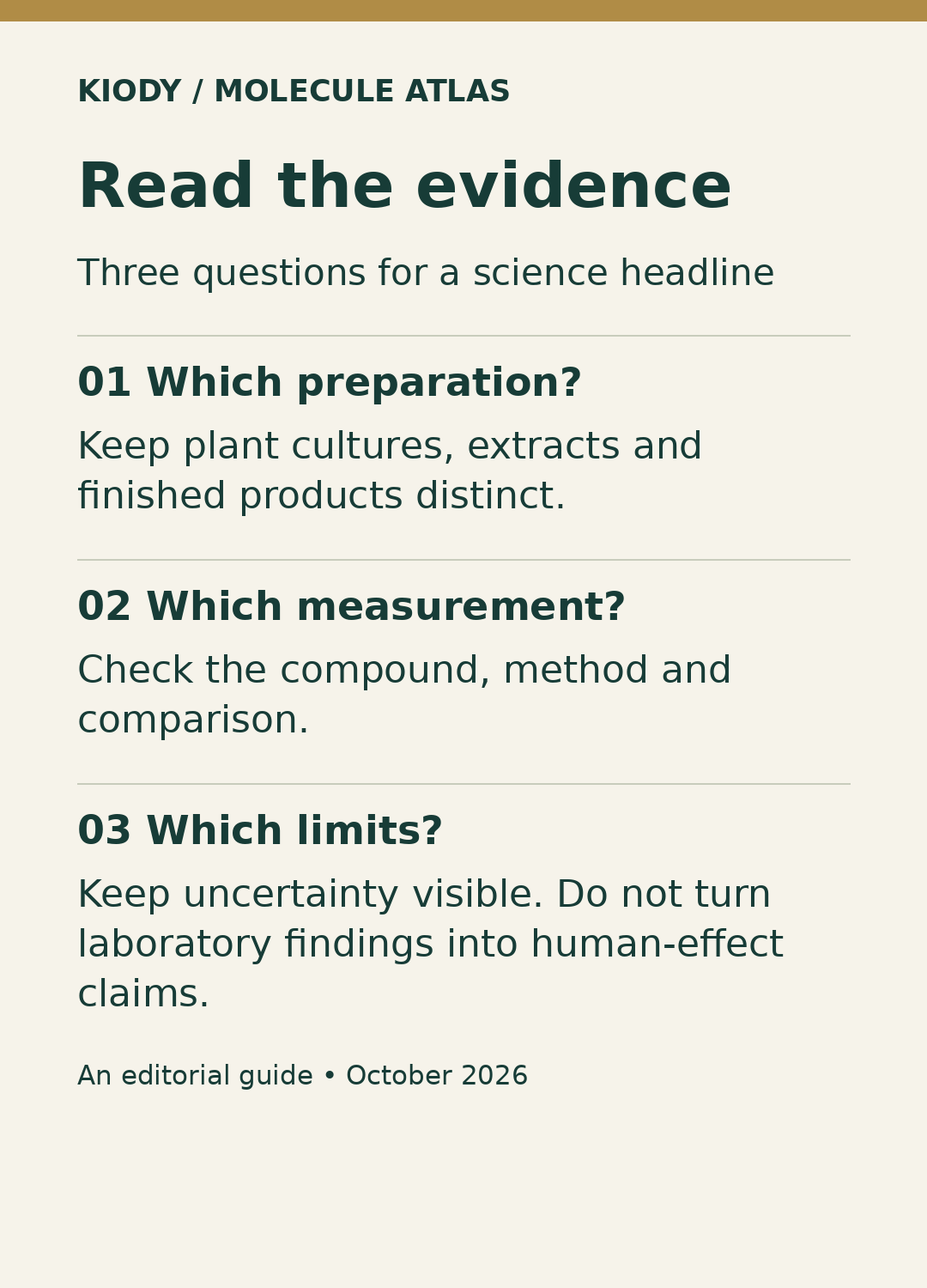
A study published October 13, 2026 examined laboratory-grown Mesembryanthemum tortuosum, also known as Sceletium tortuosum. Researchers tested plant-growth regulators and measured four mesembrine-type alkaloids: mesembrenone, mesembranol, mesembrenol and mesembrine. This was a plant-culture experiment, not a human trial. [1]
Read the measurement carefully
The study’s “total alkaloids” means the sum of those four measured compounds. It does not mean every substance in the plant. Results depended on the compound and experimental condition; a change in the total cannot be assigned to every individual alkaloid. [1, 2]
Keep inputs separate from ingredients
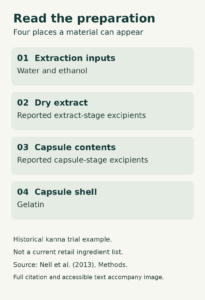
Growth regulators were experimental culture inputs. Methanol was used to prepare analytical samples. Those roles do not establish ingredients or residues in a commercial kanna product. [1]
What remains uncertain
The supplement reports a lowest calibration standard below each compound’s quantification limit. Kiody’s review also found a sample-concentration question that depends on whether an additional dilution occurred. The accessible methods do not resolve it. These are reporting questions, not proof that the measurements are wrong. We therefore avoid precise product rankings based on these results. [1, 2]
What readers can conclude
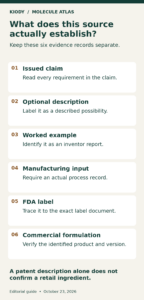
The experiment informs a narrow question about plant chemistry under laboratory conditions. It does not establish human benefits, interaction risks, consumer dosing or the composition of a named retail preparation. Evidence about one preparation should stay attached to that preparation.