Important: This educational guide is not legal or medical advice and is not a nationwide legality guarantee. Laws, emergency orders, agency rules, local ordinances, and enforcement positions can change. Always check current official sources for the exact product and delivery address before ordering. A checkout page accepting an address does not prove that a transaction is lawful.
The short answer
Whether kratom can ship to a particular address depends on more than the word “kratom.” The answer may change based on:
- the destination state, county, city, or tribal jurisdiction;
- whether the product is ordinary botanical leaf, an extract, enhanced material, concentrated 7-hydroxymitragynine, or a synthesized or semi-synthesized derivative;
- the measured concentration and the way a legal threshold is calculated;
- the customer’s age;
- the activity being regulated—sale, delivery, distribution, possession, manufacture, advertising, or use;
- the date the order will be accepted, shipped, delivered, and possessed; and
- whether a government action is a proposal, enacted law, final rule, emergency order, court order, or enforcement announcement.
That is why “legal in all 50 states” is not responsible product copy. A useful shipping check identifies the product, place, action, status, and date. If one of those five elements is missing, the answer is incomplete.
Why one kratom legality map is not enough
A colored map may be convenient, but it can hide the facts that matter most. One state may restrict all Mitragyna speciosa products. Another may allow botanical leaf while prohibiting synthesized alkaloids or products above a 7-OH threshold. A third may regulate labeling, package form, retail access, or age without imposing the same possession rule. A city or county may add a restriction that is not obvious from a state-level summary.
Maps also become stale. A governor may issue an emergency order, an agency may adopt a temporary rule, a legislature may set a future effective date, or a court may pause enforcement. A page that does not show when it was reviewed and link directly to the controlling government document should be treated as a starting point—not a final legal answer.
Kiody’s customer-facing approach should therefore combine:
- a dated national tracker written in plain language;
- destination controls based on reviewed jurisdictions;
- product-form and composition data tied to each SKU;
- a manual hold process for uncertain or rapidly changing destinations; and
- direct links to official sources.
No single layer should be presented as perfect or permanent.
Step 1: Identify exactly what product is being shipped
Before researching the destination, identify the item. “Kratom” may refer to very different products:
| Product category | Basic description | Why the category matters legally |
|---|---|---|
| Botanical leaf powder | Ground or powdered Mitragyna speciosa leaf | Some actions expressly distinguish ordinary leaf from elevated or synthetic products; other actions cover the plant broadly |
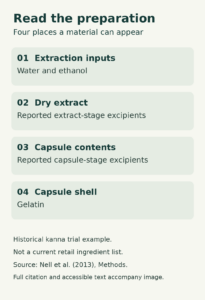
| Pure-leaf capsules | Botanical leaf powder inside a capsule shell | Usually follows the leaf formulation, but the ingredient list and measured composition still matter |
| Traditional extract | A concentrated preparation made from botanical material | Concentration, total alkaloids, 7-OH amount, processing method, and state definitions may affect treatment |
| Enhanced product | Leaf or extract with added or artificially elevated alkaloid content | May trigger restrictions aimed at added, enhanced, or elevated 7-OH |
| Concentrated 7-OH product | A product formulated to deliver elevated 7-OH | Frequently treated differently from ordinary botanical leaf and may be prohibited by threshold or controlled-substance rules |
| Synthesized or semi-synthesized derivative | A chemically produced or materially altered kratom-related compound | May be prohibited even where unenhanced botanical leaf remains allowed |
| Mitragynine pseudoindoxyl, MGM-15, or MGM-16 product | A product containing one of the three substances temporarily placed in federal Schedule I | Retail sale and unauthorized possession are prohibited federally as of August 26, 2026 |
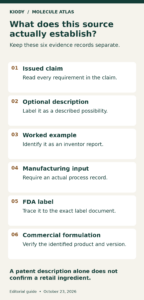
A product image is not enough. Review the formulation, ingredient statement, batch specification, quantitative laboratory data, and manufacturing description. A leaf graphic or the word “botanical” does not prove the product is ordinary leaf.
Step 2: Name the regulated activity
“Can it ship?” bundles several legal questions together. Separate them:
- May the seller offer or advertise the product to someone at the destination?
- May the seller complete the sale?
- May the seller distribute, deliver, or ship it into the jurisdiction?
- May the carrier transport it?
- May the customer receive or possess it?
- May a licensed or registered person handle it under a specific exception?
A rule that prohibits retail sale is not automatically worded the same as a rule that criminalizes possession. Conversely, a possession prohibition can make delivery to a consumer legally and practically impossible even if a website’s checkout software has not been updated.
A responsible seller should use the broadest confirmed restriction that applies to the transaction while compliance review is pending. If an official source clearly prohibits possession, sale, and distribution, a customer-facing notice should not soften that to “shipping may be delayed.”
Step 3: Check state and local law—not only federal status
Federal status is one layer. State and local governments can be more restrictive. The July 2026 federal notice concerning 7-OH expressly notes that the proposed federal action would not preempt more restrictive state law.
For each destination, check official sources in this order:
- the state legislature’s enacted-law or session-law database;
- the state administrative-register or agency-rule database;
- the governor’s executive-order page;
- the attorney general’s enforcement and litigation releases;
- the state department of health, pharmacy board, agriculture department, or other responsible agency;
- county and municipal code or health-department pages; and
- current court orders affecting enforcement.
Vendor blogs, trade-group summaries, news stories, and marketplace maps can help locate an issue, but they should not be the final authority. The final tracker entry should link to a government document and identify its legal status.
Statewide does not always mean the whole answer
A state may not have one comprehensive kratom statute, but a city or county may still restrict the product. The absence of a state ban does not prove that every address in that state is eligible. Local rules can also use different definitions, ages, thresholds, or product-form language.
The delivery address—not the customer’s billing address, home state, or current location—should control the shipping eligibility check. If the customer changes the delivery address, the legal review must run again.
Step 4: Read the legal status label carefully
The title of a government document does not always tell you whether it is currently enforceable. Use precise status terms.
Bill
A bill is proposed legislation. Even if it passes one chamber or both chambers, verify whether it was signed, vetoed, allowed to become law, or referred for another action. Then find the effective date. “Passed” does not always mean “effective today.”
Enacted law
An enacted law has completed the required legislative process. Its provisions may take effect immediately, on a named future date, after rulemaking, or in phases. Record both the enactment date and operative date.
Proposed rule or notice of intent
A proposal announces an agency’s intended action or opens a process. It should not be described as effective law unless the governing procedure gives it immediate legal force and the official document says so. A federal notice of intent to issue a temporary scheduling order is not the same document as the later temporary order.
Final or temporary order
A final or temporary order may be effective immediately or on a stated date. Check its expiration, possible extension, covered substances, exceptions, and registration requirements.
Emergency rule or executive order
Emergency actions can take effect quickly and may have a limited duration. Verify the issuing authority, exact operative time, geographic reach, and whether another proceeding will replace or extend the action.
Agency guidance or enforcement notice
Guidance explains an agency’s view or priorities but may not create the same obligations as a statute or rule. An enforcement announcement may still be operationally important, especially when it identifies products, claims, or thresholds under active scrutiny. Label it accurately.
Court order
A court may enjoin, narrow, uphold, or invalidate government action. Record the court, case number, date, scope, and whether the order is temporary, preliminary, or final. Do not infer statewide impact from a party-specific ruling without review.
Step 5: Record the effective date and exact time
The date an action is announced can differ from the date it becomes effective. An article published on Monday may describe a prohibition beginning Friday. A bill signed in one year may not operate until the next. A federal final order may take effect on publication.
For shipping decisions, record at least:
- publication or signature date;
- effective date and time, if stated;
- expiration date, if temporary;
- dates of amendments or extensions;
- last official-source review date; and
- the dates relevant to the order: acceptance, fulfillment, carrier handoff, delivery, and possession.
If a prohibition becomes effective before expected delivery, do not assume an earlier purchase date protects the shipment. Place the order on hold for legal review.
Step 6: Understand how thresholds are measured
A number without its measurement basis is dangerous. Common legal formulations can include:
- percentage of the product’s total alkaloid composition;
- percentage by dry weight;
- percentage by weight, volume, or weight-to-volume;
- milligrams per unit;
- milligrams per serving;
- milligrams in the entire article or container; or
- a combination of percentage and absolute-amount tests.
These are not interchangeable. For example, “2% of total alkaloid composition” is not the same as “2% of the finished product by weight.” A product can comply with one mathematical test and fail another.
The COA must also use compatible units and describe the correct batch. Do not convert a laboratory result into a legal conclusion unless the numerator, denominator, product form, sample basis, and applicable statutory definition are all clear. When a rule uses an absolute amount per article, the package configuration may matter in addition to concentration.
Current examples showing why product and place both matter
These examples are included to teach the method. They are not a complete nationwide list.
Federal: pending 7-OH threshold action
On July 6, 2026, the Drug Enforcement Administration published a notice of intent concerning 7-OH above specified thresholds. For botanical Mitragyna speciosa material, the notice proposes control above 0.050% 7-OH by dry weight. For certain processed or synthetic-method articles, it proposes control above 0.050% by weight, volume, or weight-to-volume, or more than 1.00 milligram in the article.
The Department of Health and Human Services opened a related request for information and later extended the public-comment deadline to September 10, 2026. As of August 28, 2026, the 7-OH threshold action is still a pending notice and proposal—not a final temporary scheduling order. DEA notice of intent concerning 7-OH above a specified threshold HHS comment-period extension
That status distinction matters. A responsible seller should explain the proposal and prepare for possible change, but should not tell customers that the proposed federal thresholds are already effective nationwide.
Federal: separate final order for three related substances
On August 26, 2026, a separate DEA temporary order placed mitragynine pseudoindoxyl, MGM-15, and MGM-16 in Schedule I. The order is effective through August 26, 2028 unless extended or replaced under federal law. Retail sales to the general public are not allowed, and unauthorized possession of any quantity on or after the effective date is unlawful. DEA temporary scheduling order
This is an effective order, not merely a proposal. It is also separate from ordinary botanical leaf and from the pending federal 7-OH threshold action. A compliant catalog should not list products containing those three substances for ordinary retail sale.
Massachusetts: broad emergency statewide action
Massachusetts’ Department of Public Health signed an emergency Schedule I order on August 13, 2026, with an effective date of August 28, 2026. Official state and municipal materials explain that the action reaches kratom broadly, including the plant and kratom-related products, rather than only concentrated 7-OH. They state that possession, distribution, or sale is unlawful without a Massachusetts Controlled Substances Registration and that municipal enforcement may include cease-and-desist notices, citations, and license or permit suspension. The order may remain in effect for up to one year, through August 28, 2027. Massachusetts Department of Public Health kratom page Official Shrewsbury implementation notice
For an ordinary consumer order, the operational result is a statewide hold: A responsible seller should not sell or ship botanical leaf, extracts, concentrated 7-OH, or other covered kratom products to Massachusetts without legal clearance.
North Dakota: executive order covering all kratom products
North Dakota Executive Order 2026-04 took effect at 5:00 p.m. on August 5, 2026. The order prohibits a person from knowingly or intentionally creating, manufacturing, delivering, distributing, selling, purchasing, or possessing kratom or a kratom product within the state. The governor’s official announcement separately describes an emergency pharmacy-board rule classifying 7-OH as Schedule I and calls for legislative action. North Dakota Executive Order 2026-04 North Dakota governor’s announcement
This is another example where a leaf-only product distinction does not solve the shipping question: the executive order uses broad statewide language. A responsible seller should keep North Dakota kratom orders blocked while the emergency action remains operative and until subsequent legislative or court developments are reviewed.
Colorado: regulated sales with product-specific limits
Colorado’s enacted SB25-072, effective May 29, 2025, illustrates a different model. It prohibits sales to people under 21 and prohibits specified product forms and compositions, including products containing synthesized or semi-synthesized kratom alkaloids and products in which 7-OH exceeds 2% of the product’s total alkaloid composition. It also establishes labeling, display, and other requirements. Colorado General Assembly: SB25-072 Colorado Session Law, Chapter 283
Colorado’s 2%-of-alkaloid-composition test should not be rewritten as 2% by total product weight. The law is also not permission to sell every product below that number: other formulation, labeling, age, storage, and product-form requirements still apply.
What customers should save
An adult customer researching a lawful purchase should keep:
- a screenshot or PDF of the dated product page;
- the order confirmation and delivery address;
- photographs of the package, ingredients, warnings, and lot number;
- the full batch-specific COA;
- the official government source used for the destination check; and
- any written response from the seller about product identity or eligibility.
Those records do not create legality, but they make questions and corrections easier. They also prevent a later website update from erasing the information tied to a particular purchase.
Common shipping-claim red flags
Pause when a seller says:
- “legal in all 50 states” without a date and product-specific legal basis;
- “federally legal, so every state must allow it”;
- “under 2%” without explaining the denominator;
- “natural” without disclosing enhancement or processing;
- “same as leaf” for a concentrated 7-OH or derivative product;
- “the bill passed, so the ban starts now” without an effective date;
- “the proposal is only a proposal, so no other law matters”;
- “our checkout accepted your ZIP code, so it is legal”;
- “lab tested” without a matching batch report; or
- “not for human consumption” as an attempted workaround for an otherwise regulated consumer product.
Responsible language acknowledges uncertainty and links to evidence. It does not turn a complicated legal question into a marketing guarantee.
Frequently asked questions
Is botanical kratom leaf federally banned as of August 28, 2026?
The current federal 7-OH threshold action is still pending and is written to distinguish botanical material below the proposed threshold from elevated products. A separate effective federal order controls mitragynine pseudoindoxyl, MGM-15, and MGM-16. However, state or local law may prohibit botanical leaf regardless of the federal distinction, as the current Massachusetts and North Dakota examples show.
If a product contains less than 2% 7-OH, can it ship everywhere?
No. The “2%” figure may refer to a specific state’s test based on total alkaloid composition. Other jurisdictions may use a different threshold, a different denominator, an absolute milligram limit, or a broad prohibition covering all kratom. Labeling, age, product-form, and local requirements may also apply.
Is a notice of intent the same as a ban?
Not automatically. A notice of intent announces an intended agency action. Verify whether a separate final or temporary order has been issued and when it becomes effective. The July 2026 federal 7-OH threshold notice is pending; the August 26, 2026 order for mitragynine pseudoindoxyl, MGM-15, and MGM-16 is effective.
Can a website ship an order before a new restriction starts?
Do not assume so. Acceptance, shipment, delivery, and possession can occur on different dates, and the governing document may regulate more than sale. If a restriction will be effective before delivery, the order should be held for legal review.
Does a seller’s ability to generate a shipping label prove legality?
No. Shipping software is an operational tool, not a legal determination. A stale or incomplete restriction table can allow a label to be created for an ineligible destination.
Can a customer use a neighboring-state address?
A responsible seller should not advise customers to route products around a restriction. The destination, receipt, transport, and possession rules may all matter. Customers should obtain qualified legal guidance rather than attempt a workaround.
Are extracts automatically illegal where leaf is allowed?
Not necessarily, but extracts may face different composition, labeling, product-form, or threshold rules. The exact formulation and jurisdiction must be checked.
What if a city and state appear to have different rules?
Review both. A local jurisdiction may impose a stricter requirement, and state law may address whether local regulation is permitted or preempted. Do not infer the answer from silence.
How often should a shipping table be reviewed?
There is no single legally sufficient interval. Monitor official sources continually when emergency actions or federal proceedings are active, review before each material catalog or fulfillment change, and display the last reviewed date to customers. High-risk or ambiguous orders should receive a fresh manual check.
Does “21+ only” make every kratom sale lawful?
No. Age gating addresses one issue. Product composition, packaging, labeling, destination, possession, and other restrictions can still prohibit the transaction.
High-impact verified changes as of August 28, 2026
These examples show why a live tracker matters. They are not a substitute for checking every destination and the exact product.
| Jurisdiction | Verified status | Commerce impact |
|---|---|---|
| Tennessee | A statewide kratom ban took effect July 1, 2026. | Do not ship botanical leaf or covered kratom products into Tennessee. |
| Rhode Island | A licensed 21+ fixed-location market took effect April 1, 2026; delivery to retail purchasers is prohibited. | Direct-to-consumer delivery is not permitted. |
| Minnesota | The minimum age for sale and possession changed to 21 on August 1, 2026. | Age verification must use 21, not 18. |
| Virginia | A regulated 21+ market with 7-OH limits and a synthetic/semi-synthetic sales prohibition took effect July 1, 2026. | Check product composition, labeling, age, and retail-access rules. |
| Ohio | A permanent product-specific rule took effect May 19, 2026. Natural whole or ground leaf in vegetation form is treated differently from 7-OH, mitragynine pseudoindoxyl, MGM-15, and other named derivatives. | Do not infer that extracts, enhanced products, or capsules share the leaf exemption. |
| Kentucky | HB 757 is enacted but its kratom commerce prohibition begins January 1, 2027. | Do not present the future ban as already effective; prepare destination controls before the effective date. |
Official sources: Tennessee Public Chapter 950, Rhode Island Kratom Act, Minnesota 2026 Session Laws, Chapter 63, Virginia Chapter 595, Ohio Administrative Code 4729:9-1-01.1, and Kentucky HB 757.
Primary official sources
- U.S. Drug Enforcement Administration, notice of intent concerning 7-OH above a specified threshold, published July 6, 2026: https://www.federalregister.gov/documents/2026/07/06/2026-13580/schedules-of-controlled-substance-temporary-placement-of-7-hydroxymitragynine-above-a-specified
- U.S. Department of Health and Human Services, extension of related public-comment period through September 10, 2026, published August 26, 2026: https://www.federalregister.gov/documents/2026/08/26/2026-17409/hydroxymitragynine-above-a-specified-threshold-in-schedule-i-extension-of-comment-period
- U.S. Drug Enforcement Administration, temporary Schedule I order for mitragynine pseudoindoxyl, MGM-15, and MGM-16, effective August 26, 2026 through August 26, 2028: https://www.federalregister.gov/documents/2026/08/26/2026-17429/schedules-of-controlled-substances-temporary-placement-of-mitragynine-pseudoindoxyl-mgm-15-and
- U.S. Food and Drug Administration, “FDA and Kratom,” updated December 2, 2025: https://www.fda.gov/news-events/public-health-focus/fda-and-kratom
- Massachusetts Department of Public Health, kratom emergency-order information: https://www.mass.gov/info-details/kratom
- Town of Shrewsbury, Massachusetts, official implementation notice: https://shrewsburyma.gov/CivicAlerts.aspx?AID=9713
- North Dakota Executive Order 2026-04: https://www.governor.nd.gov/sites/default/files/documents/Executive%20Order%202026-04%20-%20kratom.pdf
- North Dakota Office of the Governor, emergency-action announcement, August 3, 2026: https://www.governor.nd.gov/news/armstrong-wrigley-announce-executive-actions-ban-unregulated-drug-kratom-amid-growing-concerns
- Colorado General Assembly, SB25-072 and enacted Chapter 283: https://leg.colorado.gov/bills/SB25-072 and https://leg.colorado.gov/laws/session-laws/SB25-072/283/download